Money & Life Skills · A family activity
A 10-Minute Pretend Store Game That Gets Kids Talking About Money
A few toys, six paper tokens, and one simple question: “What would you choose?” Try this screen-free money game together—no shopping trip required.
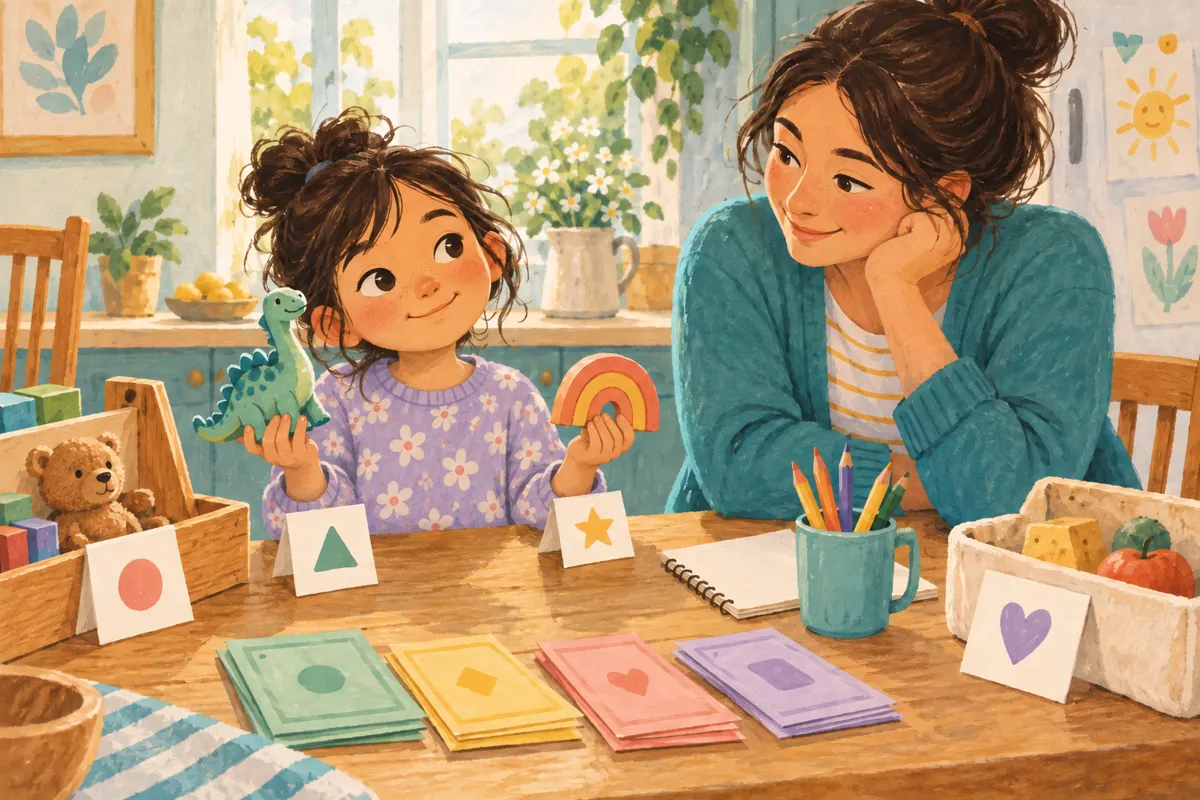
You do not need a big family meeting to start talking about money. Set up a pretend store on the kitchen table and give your child a small, make-believe budget. The interesting part is hearing how they decide what to buy, what to leave behind, and whether to change their plan.
This activity takes about 10 minutes, with room to keep playing if your child wants to. It is a new activity for this article, not an excerpt from the Ready 2 Play book or Starter Pack.
What you need
- Three familiar objects, such as a toy dinosaur, a notebook, and a box of crayons.
- Six large paper tokens. Each token represents one pretend dollar.
- Paper price tags and a pencil.
Use objects you already own. Nothing is being sold, and no real money changes hands. Pick items your child can handle comfortably; you can do all the reading and counting together.
1. Open your tiny store
For this example, give the notebook a price of $3, the dinosaur a price of $4, and the crayons a price of $2. These are pretend prices for the game, not suggested retail prices. Place each tag beside its item and give your child six tokens.
Explain the rule before play begins: “You have six pretend dollars. You can choose what to buy, as long as you have enough.” Let your child look around before asking for a decision.
2. Let your child make the first choice
Ask, “What would you like to choose?” If they pick the dinosaur and the notebook, put four tokens beside one and three beside the other. Together, count the seven tokens needed and compare that with the six available.
Then ask, “How could we change the plan?” Your child might choose the dinosaur and crayons for $6, or the notebook and crayons for $5 and keep one token. There is no single best purchase. The shared rule is that the total must fit the budget.
If counting interrupts the fun, work with just two items or count the tokens yourself. Keep the choice in your child’s hands.
3. Listen before offering advice
Choose one or two questions rather than turning the game into a quiz:
- “What made you choose that one?”
- “Was there something you wanted but left behind?”
- “Would you make the same choice if we played again?”
Make room for an answer you would not have chosen. “You wanted the dinosaur most, so you changed your other choice” describes the decision without labeling your child a good or bad spender.
4. Swap roles and try again
Return the objects and tokens, then let your child run the store. Keep the same prices for this round so the comparison stays simple. As the shopper, say your thinking out loud: “I like both of these, but together they cost seven. I have six, so I’ll choose a different pair.”
If your child wants to introduce a discount, agree on it before completing the purchase and recalculate the total together. You can also close the store after one round. A short conversation is enough for today.
Bring one question into everyday life
On another day, invite your child into a small, manageable choice—for example, choosing between two options that already fit your shopping budget. You do not have to discuss household bills or ask your child to solve adult money worries.
The Consumer Financial Protection Bureau’s Money as You Grow resources suggest involving children in small shopping decisions and explaining your own choices out loud. This game offers one way to start that conversation at home.
Where does investing fit?
This pretend store introduces a budget and tradeoffs; it does not simulate investment returns. Investing is a different topic: money committed to an investment can lose value, and returns are not guaranteed. There is no need to add those ideas to your first round of play.
For another hands-on activity, explore James Teen’s Ready 2 Play Starter Pack. The existing offer includes printable Star-Dollars and a screen-free mission focused on budgeting and negotiation. It is separate from the activity above.
Sources and further reading
Consumer Financial Protection Bureau: Young children and shopping. The activity and examples in this article were created for James Teen; they are not endorsed by the CFPB.